z-z1349083604102.webp)
z-z1692475211751.png)
A top guide to Chinese characters :
Thinking about learning Chinese,but worried about the Chinese characters?
Fear not! Although they might seem intimidating if you're just about to start learning Mandarin Chinese, the characters are one of the most fun and interesting parts of this language.
These logographic symbols represent some of China's oldest history, with some of the earliest Chinese characters dating back over 3,000 years ago. As such, they carry deep cultural meanings and are an irreplaceable part of the Chinese language. If you're familiar with the difference between Mandarin and Cantonese, then you know that characters are the unifying force behind all Chinese dialects. While each dialect has unique pronunciations and some grammar differences, the meaning of the characters remains largely unchanged across dialects - making them all part of the Chinese language.
So, if you've already reviewed our 10 expert tips to learn Chinese characters and are ready to go all in by learning about the origin, types, and meaning of them, then this guide is for you. We've even included a chart of the 100 most common ones to help you kickstrat your journey to Chinese fluency!
We've got a lot of ground to cover, So let's get right to it!
z-z1715774956600.png)
Components of Chinese characters
Chinese characters can typically be broken down into the following key components :
What are Chinese characters?
Chinese characters are logograms used to write Chinese. Instead of using an alphabet, Chinese uses these symbols to represent meaning. Each character corresponds to a syllable and, by extension, a word or concept. Words in Chinese are mostly made up of two or three characters, so you can think of them as the building blocks of written Chinese.
There are thousands of characters, although knowing just 3,000 to 4,000 of them is enough to navigate modern Chinese. That's because most words are made up of a combination of the most common characters. This means that Chinese is a language that builds upon itself, as once you learn your first few hundred characters, learning new words will be significantly easier as you'll already know some of the characters!
Let's take a closer look :
Early history
The history of Chinese characters can be traced back over 3,000 years to the Shang Dynasty, where the earliest known scripts were inscribed on oracle bones. There ancient characters, known as "jiaguwen" [甲骨文], were mainly used for divination purposes. They were pictographic in nature, meaning they were symbols that directly represented objects, animals or concepts. For instance, the character for "sun" [日] resembled a circular object with a dot in the center, symbolizing the sun.
Evolution
Over the centuries, Chinese characters have undergone singificant evolution in form and function. Following the oracle bone script, the Bronze Age brought about the Bronze Inscriptions, known as the "jinwen" [金文] , used in inscriptions on bronze artifacts. This script eventually evolved into the Seal script during the Western Zhou dynasty, or "dazhuan" [大篆], characterized by its more stylized and abstract forms.
The Qin dynasty marked a pivotal moment in the standardization of characters through the promotion of the Small Seal script, known as "xiaozhuan" [小篆] as the official national writing standard. The first emperor of China, Qin Shi Huang, who sought to unify the writing system across his empire, drove this effort. However, the complexity of the Seal script led to the development of the Clerical script, or "lishu" [隶书] , during the Han dynasty, which featured a more linear and simplified style.
The Tang Dynasty then saw the popularization of the Regular script, also known as "kaishu" [楷书] , which is the basis for contemporary Chinese writing. This script is characterized by its balanced structure and is the style commonly taugh in schools today.
Components of Chinese characters
Chinese characters can typically be broken down into the following key components :
> Radicals : Chinese radicals are the building blocks of characters. They often indicate the general semantic category to which a character belongs. which can help you figure out its meaning even if you've never seen it before. For example, the radical for water [氵] is found in characters related to liquid or fluidity.
> Phonetic components : Many characters are phono-semantic compounds that combine a semantic radical with a phonetic component. The phonetic element suggests the pronunciation of the character, while the radical conveys the general meaning.
> Strokes : The individual brush or pen movement used to write Chinese characters. There are 41 types of Chinese strokes, and each character comprises a specific sequence of these strokes.
Common vocabulary for Chinese characters
Common characters in Chinese typically comes with a few associated words. Here's the most common Chinese character vocabulary :
What are the different types of Chinese characters?
Chinese characters have evolved for thousands of years from multiple sources. That means different characters were developed from different places, so they all have diferent ways of existing. Here's a breakdown of the types you'll run into :
Pictograms 象形字 [xiàng xíng zì]
Pictograms are characters that visually represent the objects they denote. They're among the oldest types of Chinese characters and are the foundation of many complex characters.
For example :
山 [shān] - Mountain
日 [rì] - Sun
月 [yuè] - Moon
木 [mù] - Tree
人 [rén] - Person
Phono-semantic characters 形声字 [xíng shēng zì]
These characters combine a phonetic component that suggests the pronunciation and a semantic component that suggests the meaning. The majority of characters fall under this category, as this system allowed the expansion of the Chinese lexicon while maintaining a connection between form, meaning, and sound.
Here are some examples :
Simple ideograms 指事字[zhǐ shì zì]
These characters represent abstract concepts through unique vissual symbols. Simple ideograms modify or combine basic strokes to convey an idea or concept, often related to number, directions, or relationships. Due to their direct representation of ideas, they're among the most straightforward characters to understand.
Compound ideograms 会意字 [huì yì zì]
These characters combine elements to create new meanings, where each part contributes to the overall concept of the character. They illustrate complex ideas or objects by juxtaposing simple pictograms or ideograms, offering a more nuanced understanding of the terms they represent.
z-z318125438124.png)
Transfer characters 轉注字 [zhuǎn zhù zì]
Transfer characters are a unique set where the meaning of a character is extended to a related concept. This category is less common but illustrates the adaptability and evolution of the Chinese script over time.
Here is a pair of transfer characters :
>老[lǎo]_old. Originally depicted an old man holding a cane with hair hanging down. Over time, it came to broadly represent the concept of age or being old.
>孝[xiào]_Filial piety. Closely related to in representing the virtue of respecting one’s elders, showcasing the extension of meaning from “old” to a value associated with age.
Loan characters 假借字 [jiǎ jiè zì]
Loan characters are fascinating, as they were originally used for one word but were borrowed to create another word with phonetic similarity. At times, the meaning of the original character was entirely abandoned, with the newly created character conveying the original meaning. This category highlights the flexibility of the Chinese script in adapting characters for new meanings when phonetic or conceptual similarities allow for it.
>来[lai]_To come. Initially depicted wheat but was replaced by [mai] with a similar pronunciation to represent the concept. Instead was used to represent the verb “to come”. It even kind of looks like a wheat plant!
>令[ling]_To order, command. It has been used in various contexts beyond its original meaning: to order or command, serving as a loan character for its phonetics.
>朋[peng]_Friend. Originally represented a currency unit representing shell coins closely tied together, but evolved into a term for friendship, illustrating the adaptability of characters to encompass broader meanings.
5 major Chinese tones: How to understand and master them
Being a tonal language, Chinese has its own tone and pitch that determine the meaning of the word. Understanding Chinese tones is very important to determine the emotions behind the words spoken. You need to understand the sound of Mandarin Chinese tones and master them to hold meaningful Chinese conversations.
.
Each language has its own distinct sound system. Just like this, Mandarin Chinese also has its own sound system, and tones play an important role in it. The tone of a word determines its meaning in Chinese. When you change the tone or use the incorrect one, you change the meaning of the word.
.
These are the gestures you can use as you’re reading characters with different tones.
>>First tone[-] -Draw a straight line above your head to keep your pitch high and level. Notice how characters in the first tone tend to sound longer than the other, so try to draw a longer line or draw the imaginary line slowly.
>>Second tone[/]-Draw a diagonal quickly from the bottom left to the top right to slightly increase the pitch of your voice.
>>Third tone[V]-Draw a “V” or a “U” as a guide to scoop or drop, and then raise your pitch.
>>Fourth tone [\]-Draw a diagonal quickly from the top left to the bottom right to add a hard stress to the pinyin.
>>Fifth/Neutral tone [.]-Draw a dot to keep the pronunciation short and succinct.
z-z492212075671.png)
Education for Life
ทุกหลักสูตรมุ่งสร้างประสบการณ์ เพื่อผลลัพธ์ที่ดีที่สุดของผู้เรียนในทุกช่วงวัย
Learn Chinese Language with Aurora Chinese Center by Native Speaker



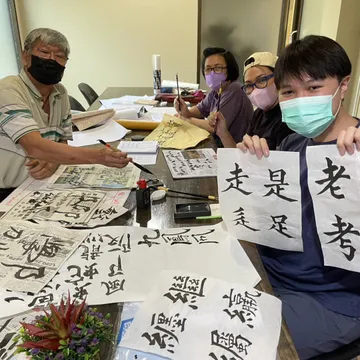
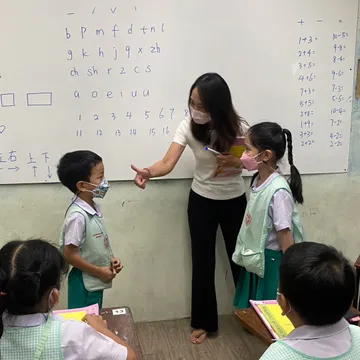

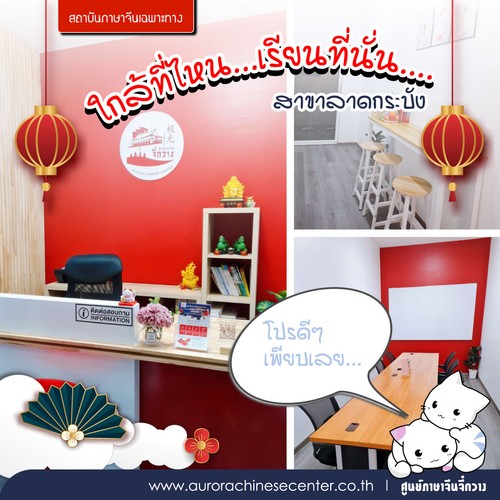
เปิดแล้วจ้าาา ... Franchise สาขาลาดกระบัง
อยู่ใกล้ที่ไหน เรียนที่นั่นเลย ... คุณภาพการสอนประสิทธิภาพเทียบเท่าสำนักงานใหญ่ เหล่าซือชาวจีนเอาใจใส่นักเรียน
ติวสอบ HSK YCT PAT และภาษาจีนสำหรับผู้เริ่มต้น
โทร 062-261 6222

Start Now!
Learn Thai with Thai Teachers ,you can learn at Aurora Chinese Center or ศูนย์ภาษาจีนจี๋กวาง.
“和专业的泰语老师学习泰语,
专注于互动交流,对答如流,
增加您与泰国人交流的信心。
可以在线学习“
教学目标:
专注于泰语的透彻理解
准确的听、说、读、写
熟练掌握句子的结构技巧
可以使用复杂的句型
ตรงตามวัตถุประสงค์ที่ต้องการเรียนรู้